Beaches
Coligny Beach
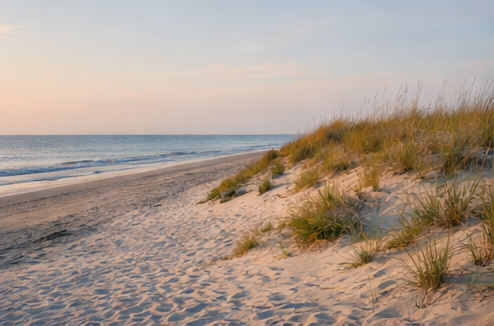
Coligny is the island’s most visible beach because it’s intentionally accessible. Wide sand, gradual shoreline, and nearby services make it functional for long days. The beach itself is expansive enough that even when it’s busy, walking a short distance creates space.
Good for:
- Long shoreline walks
- Early morning swims
- Watching how the island moves during the day
Midday is active. Early morning and sunset feel entirely different.
Driessen Beach
Driessen feels insulated. The approach through trees matters—it slows you down before you ever see the water. The shoreline here is quieter, with fewer visual distractions and more natural framing.
Best for:
- Reading
- Longer stays in one spot
- Calm afternoons
It’s one of the better beaches for being present without being observed.
Islanders Beach
Islanders is practical and understated. Limited parking naturally controls volume, and the beach attracts repeat visitors who know what they’re looking for.
Expect:
- Fewer crowds
- Consistent conditions
- A quieter rhythm
It’s not dramatic. It’s dependable.
Burkes Beach
Burkes blends recreation and routine. Close to trails and fields, it sees locals moving through rather than settling in. The shoreline mirrors other north-island beaches but carries a neighborhood feel.
Good for:
- Short visits
- Walks between activities
- Casual sunset views
Fish Haul Beach
Fish Haul is not a traditional beach. The shoreline is tidal and narrow, shaped by marsh and history rather than recreation. At low tide, exposed flats reveal patterns and life found nowhere else on the island.
This is a place to:
- Observe
- Learn
- Slow down
Swimming is secondary. Awareness is primary.
Fishing & Water Access
Fishing here is about timing, not equipment. Tides matter more than technique.
Beach Fishing
Outgoing tides tend to be most productive. Early mornings and overcast days are favored—not just for fishing, but for the calm they bring.
The rhythm is simple:
Cast. Wait. Watch the water change.
Broad Creek
A working waterway shaped by docks, boats, and current. Fishing here requires attention to structure and flow.
This is not scenic—it’s functional, active, and honest.
Skull Creek
Wider and more exposed, with strong tidal movement and dramatic light shifts. Fishing here feels elemental, especially near sunrise and dusk.
It’s one of the clearest places to understand how water controls the island.
Public Piers & Fixed Access
Piers offer predictability and quiet social spaces where information is shared naturally.
Good places to:
- Learn local patterns
- Observe without pressure
- Spend time without commitment
Nature & Preserved Land
Pinckney Island National Wildlife Refuge
Intentionally minimal. No pavement. No commercial activity. No noise beyond wind and water.
The island unfolds slowly and rewards patience.
This is not a place to do.
It’s a place to be still long enough to notice.
Sea Pines Forest Preserve
Layered and underestimated. Meadows, woods, wetlands, and boardwalks coexist here. The preserve rewards wandering rather than routing.
Light changes quickly. Quiet moments arrive unexpectedly.
Audubon Newhall Preserve
Compact and educational. Offers context—what grows here, why it matters, and how ecosystems connect.
Ideal for slower walks and shorter visits.
Marsh Trails & Creek Edges
Where the Lowcountry explains itself. Water rises and falls. Grasses move constantly. Birds appear, disappear, and return.
Nothing is staged. Everything is temporary.